
 EN
EN
 ar
ar bg
bg hr
hr cs
cs da
da nl
nl fi
fi fr
fr de
de el
el hi
hi it
it ko
ko no
no pl
pl pt
pt ro
ro ru
ru es
es sv
sv tl
tl iw
iw id
id lv
lv lt
lt sr
sr sk
sk sl
sl uk
uk vi
vi et
et hu
hu th
th tr
tr fa
fa ms
ms hy
hy ka
ka ur
ur bn
bn mn
mn ta
ta kk
kk uz
uz ku
ku
5G DTU
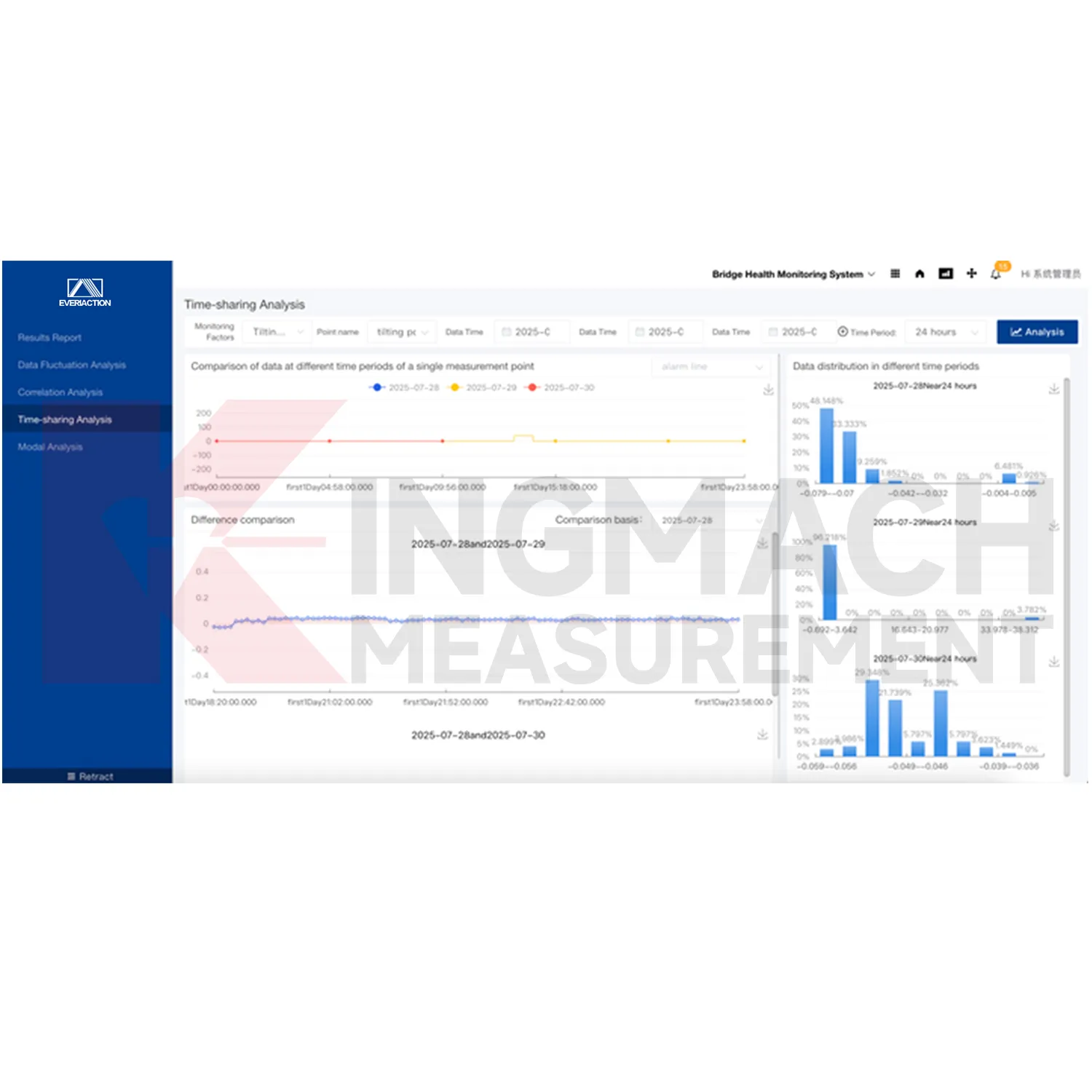
Kingmach 5G DTU supports project-based management. Users can create new projects and operate a single project as a management unit. The platform can update and maintain basic project information, dynamic project information, inspection and maintenance records, alarm levels, and project documents. This structure is useful for owners who need long-term records across different assets, phases, and teams. It also makes handover easier because data, alarms, documents, and maintenance history are not stored in unrelated places.
Application of 5G DTU
Slope monitoring benefits from Kingmach 5G DTU because slope risk often depends on several data types at once. Displacement, rainfall, groundwater, pore pressure, tilt, settlement, and inspection observations all need to be read together. A cloud-based platform can receive wired or wireless device data from field points that are difficult to access. Trend analysis and visual display help users see whether movement follows rainfall, construction disturbance, seasonal water changes, or a developing instability pattern.
The future of 5G DTU
Future use of Kingmach 5G DTU will grow as civil engineering monitoring moves from isolated instrument readings to connected asset management. More structures will rely on sensors, acquisition modules, wireless devices, and cloud platforms to maintain a continuous safety record. The software layer will become the place where owners review not just one reading, but the relationship between trends, alarms, inspections, weather, construction, and maintenance work. A platform that integrates multiple data sources will be central to that shift.
Care & Maintenance of 5G DTU
Device access for Kingmach 5G DTU should be checked carefully during commissioning. Confirm whether each instrument or acquisition module is sending data by the planned wired or wireless method. Verify channel identity, unit, timestamp, point location, and first stable value before the platform is accepted. A clean commissioning record prevents later confusion when an alarm appears. If a channel is missing, duplicated, or mislabeled, fix the data path before routine monitoring begins.
Kingmach 5G DTU
Kingmach 5G DTU helps users move from raw readings to risk awareness. The platform can build structural safety models, use formulas, algorithms, and manual engineering review to determine the location and extent of structural damage, and warn of changes in structural performance. This does not replace field inspection; it makes inspection better targeted. When a bridge cable, tunnel lining, slope, dam gallery, or building foundation shows a changing pattern, the data view can point reviewers toward the affected area, related sensors, and alarm record. That gives site teams a clearer starting point for follow-up.
FAQ
Q: What certification is listed?
A: The product information lists GB50982-2014 certification.
Q: What is the minimum order quantity?
A: The local product page lists one piece as the minimum order quantity.
Q: What is the delivery time?
A: Delivery time is listed as instant for the software platform.
Q: How is pricing handled?
A: Pricing is listed as negotiable, so project scope, configuration, and integration needs should be confirmed with Kingmach.
Q: What payment term is shown?
A: The local product page lists T/T in advance.
Reviews
Christopher Martinez
Very satisfied with the readouts & data loggers. User-friendly interface and supports multiple sensor inputs.
Matthew Garcia
Instrumentation cables are durable and perform well even in harsh environments. Will definitely order again.
Latest Inquiries
To protect the privacy of our buyers, only public service email domains like Gmail, Yahoo, and MSN will be displayed. Additionally, only a limited portion of the inquiry content will be shown.
Harper***@gmail.comIndia
Dear Sir, we are planning to procure a complete monitoring system including strain gauges, tiltmeter...
Ava***@gmail.comAustralia
Hi, I am looking for reliable tiltmeters and accelerometers for structural health monitoring. Please...