
 EN
EN
 ar
ar bg
bg hr
hr cs
cs da
da nl
nl fi
fi fr
fr de
de el
el hi
hi it
it ko
ko no
no pl
pl pt
pt ro
ro ru
ru es
es sv
sv tl
tl iw
iw id
id lv
lv lt
lt sr
sr sk
sk sl
sl uk
uk vi
vi et
et hu
hu th
th tr
tr fa
fa ms
ms hy
hy ka
ka ur
ur bn
bn mn
mn ta
ta kk
kk uz
uz ku
ku
laser displacement sensor
For reinforced soil and geogrid work, Kingmach laser displacement sensor include the JMDL-24XXAT Smart Flexible Displacement Meter. This product is built around patented inductive flux frequency modulation technology and is designed for deformation or strain monitoring in geogrid materials used in reinforced soil and pile-net subgrade foundations. The measuring rod extension is flexible, so it can deform with the geogrid while both ends are clamped by mounting brackets for reliable strain transfer. Listed ranges are 30 mm and 50 mm, with 0.01 mm sensitivity and 0.5%FS accuracy. The non-contact measurement layout keeps the measuring rod and internal coil independent, reducing damage risk during installation and service. A 20-point curve fitting process supports nonlinear correction and accurate displacement output. Kingmach lists a designed service life of up to 30 years for this product, which fits long-term railway, roadbed, slope, and foundation monitoring where buried materials cannot be visually inspected after construction. For this model, the installation record should focus on geogrid layer position, bracket clamping force, fill sequence, compaction stage, cable exit route, and the first stable value after backfilling. Those details are different from crack monitoring because the sensor is working with buried reinforcement deformation rather than an exposed joint. During later review, the curve should be checked with settlement, traffic loading, rainfall, and earthwork records so engineers can understand how the reinforced soil body is behaving.
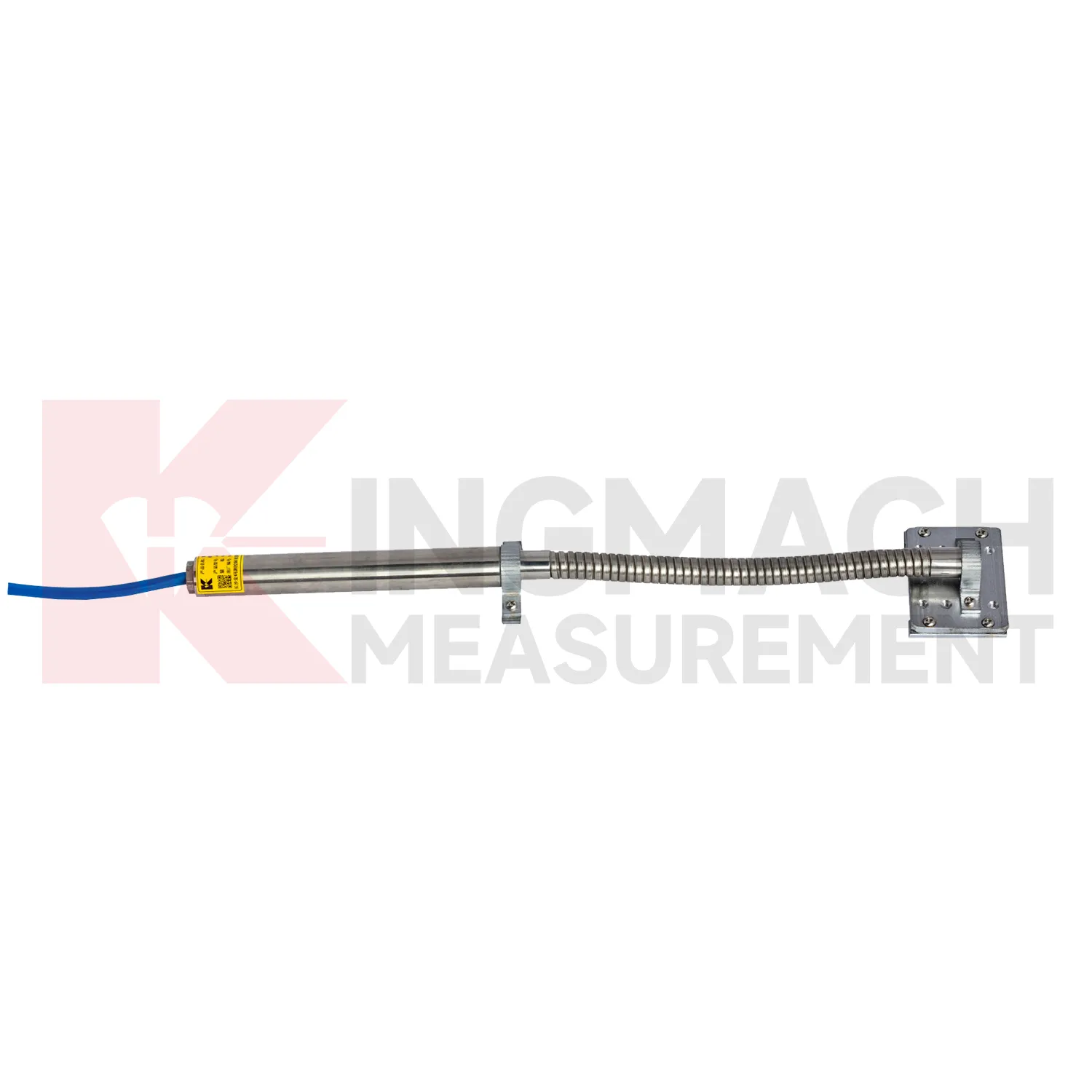
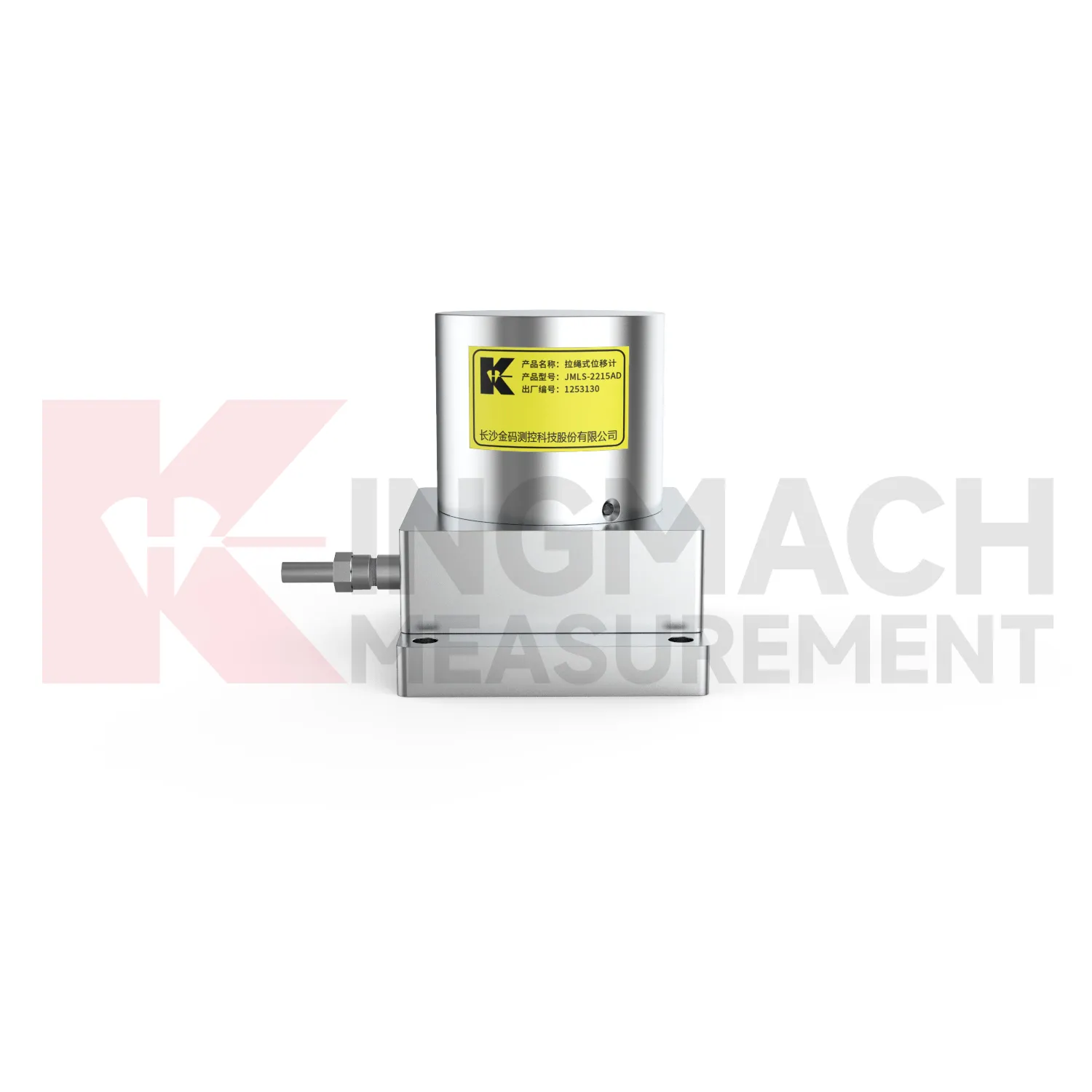
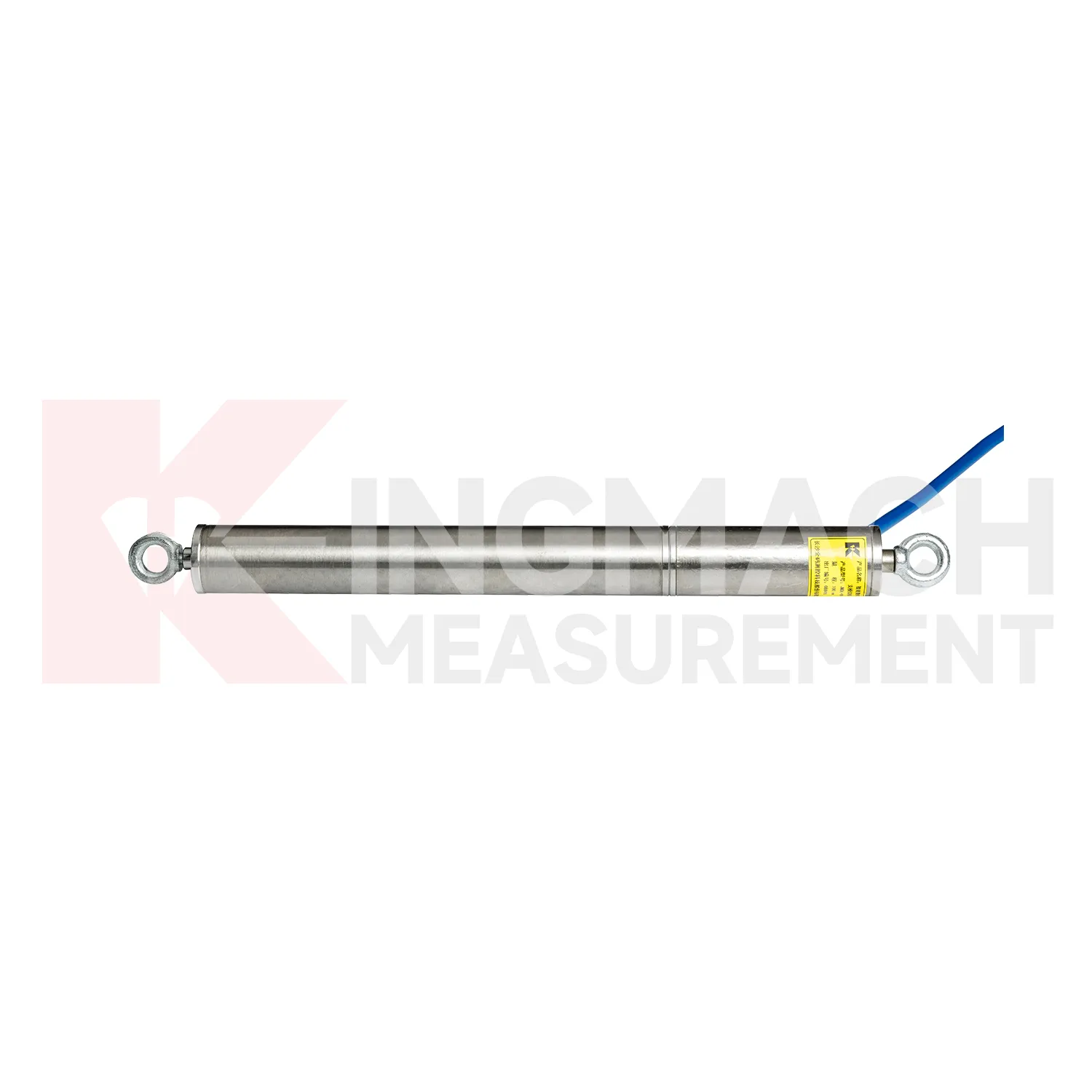
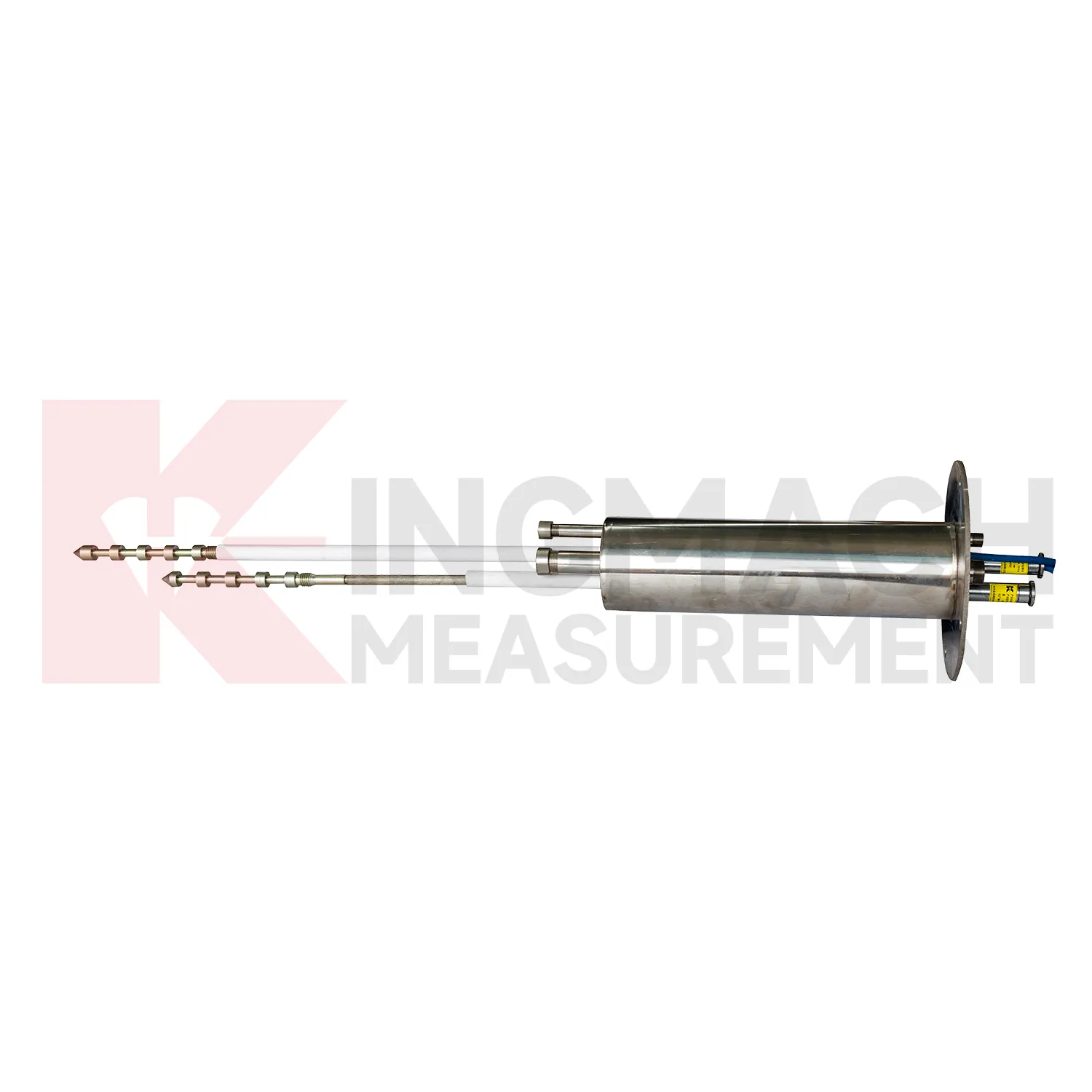
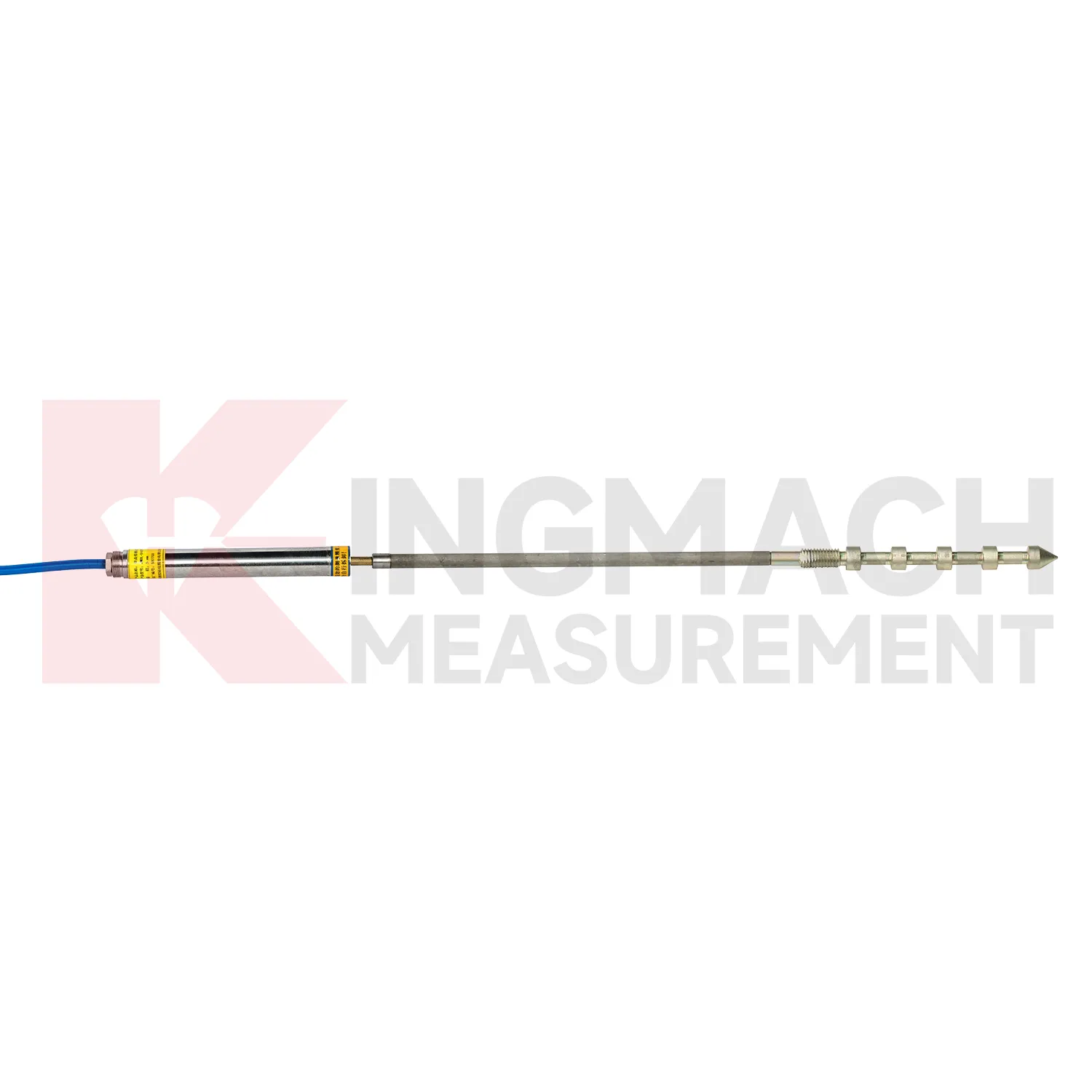
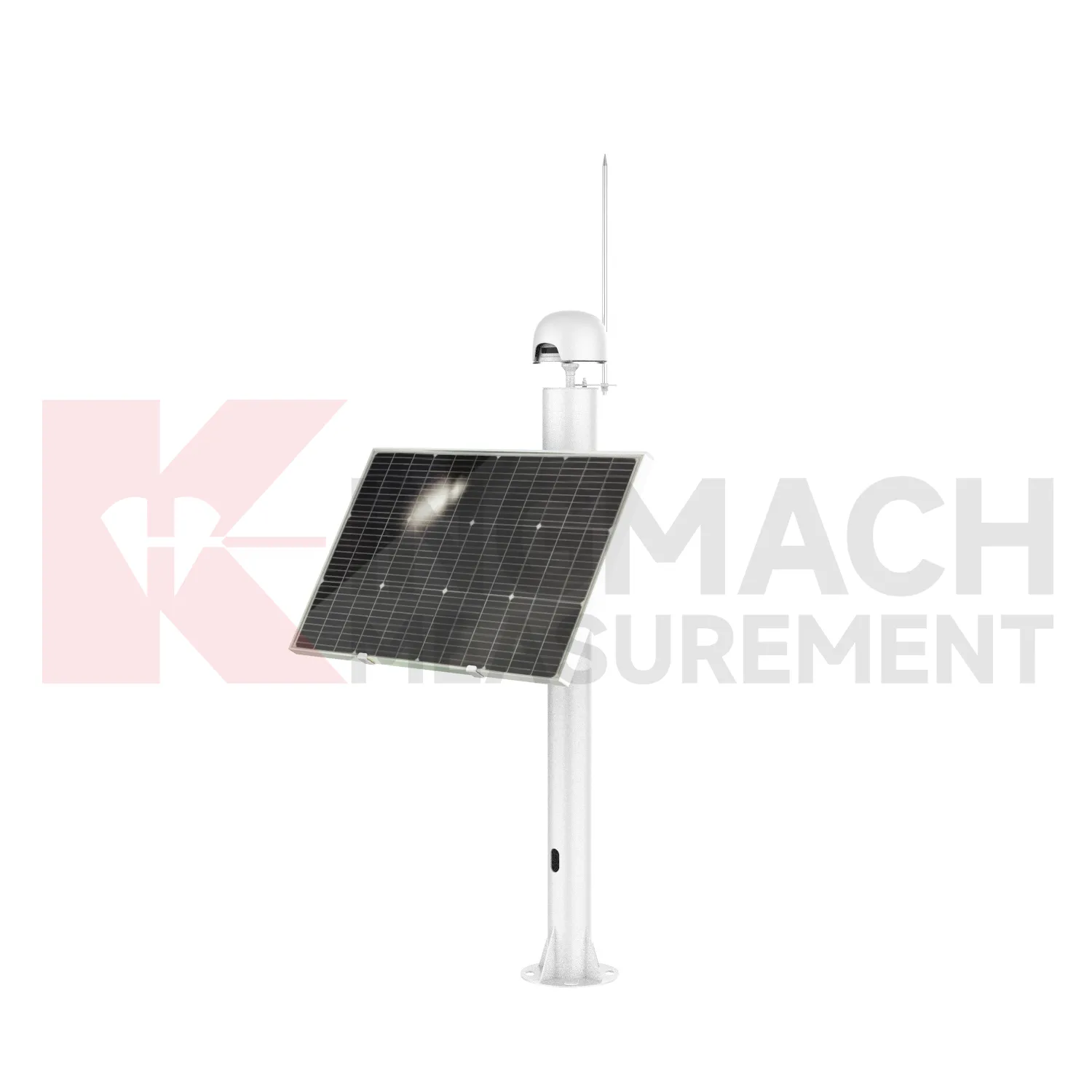
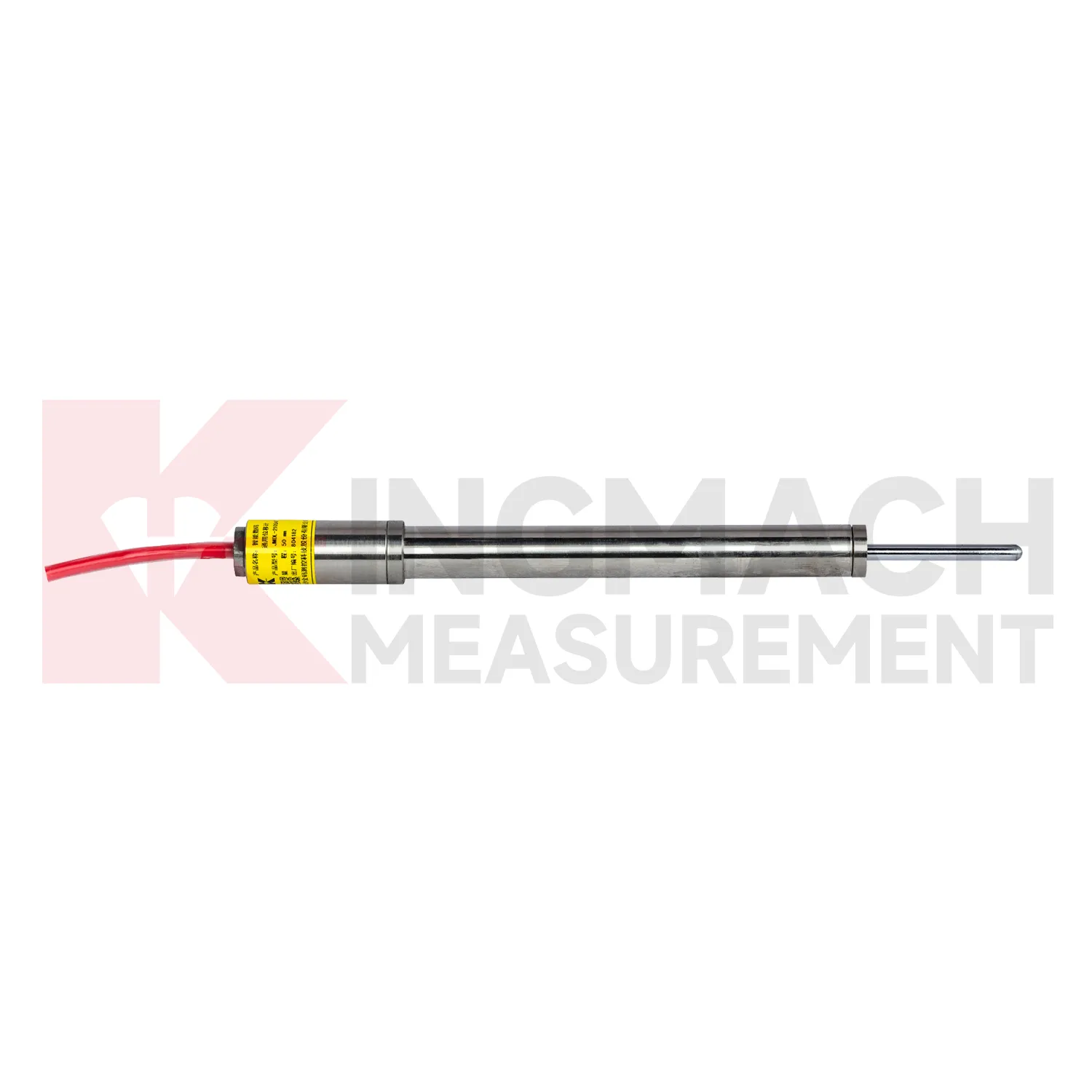
Application of laser displacement sensor
In dam and hydropower projects, laser displacement sensor can track joint opening, bedrock deformation, gate position, dam body movement, tunnel portal movement, and displacement between monitoring points. The pain point is long service life under water level fluctuation, seepage, temperature change, and difficult access. Kingmach JMDL-32XXAT single-point bedrock meters are designed for dam bedrock deformation and provide 50 mm, 100 mm, and 200 mm ranges with 0.01 mm resolution. JMDL-52XXADT differential meters can monitor relative movement in concrete joints with RS485 digital output and plus or minus 0.1%FS accuracy. JMCW-21XXADT magnetostrictive meters provide 0 to 1000 mm absolute position measurement for gates, equipment stroke, or structural movement. JMLS-22XXADT wire rope sensors support up to 2000 mm for larger displacement paths. Combined with water level, seepage, strain, and temperature monitoring, displacement data helps dam managers understand deformation behavior across operating cycles. During operation, the monitoring team should keep the baseline, temperature, inspection notes, and nearby sensor behavior in the same review file. This makes it easier to tell whether a movement trend comes from normal service, a repair event, changing load, water influence, or developing structural risk. Clear records also help owners decide when a field inspection is needed instead of waiting for visible damage.
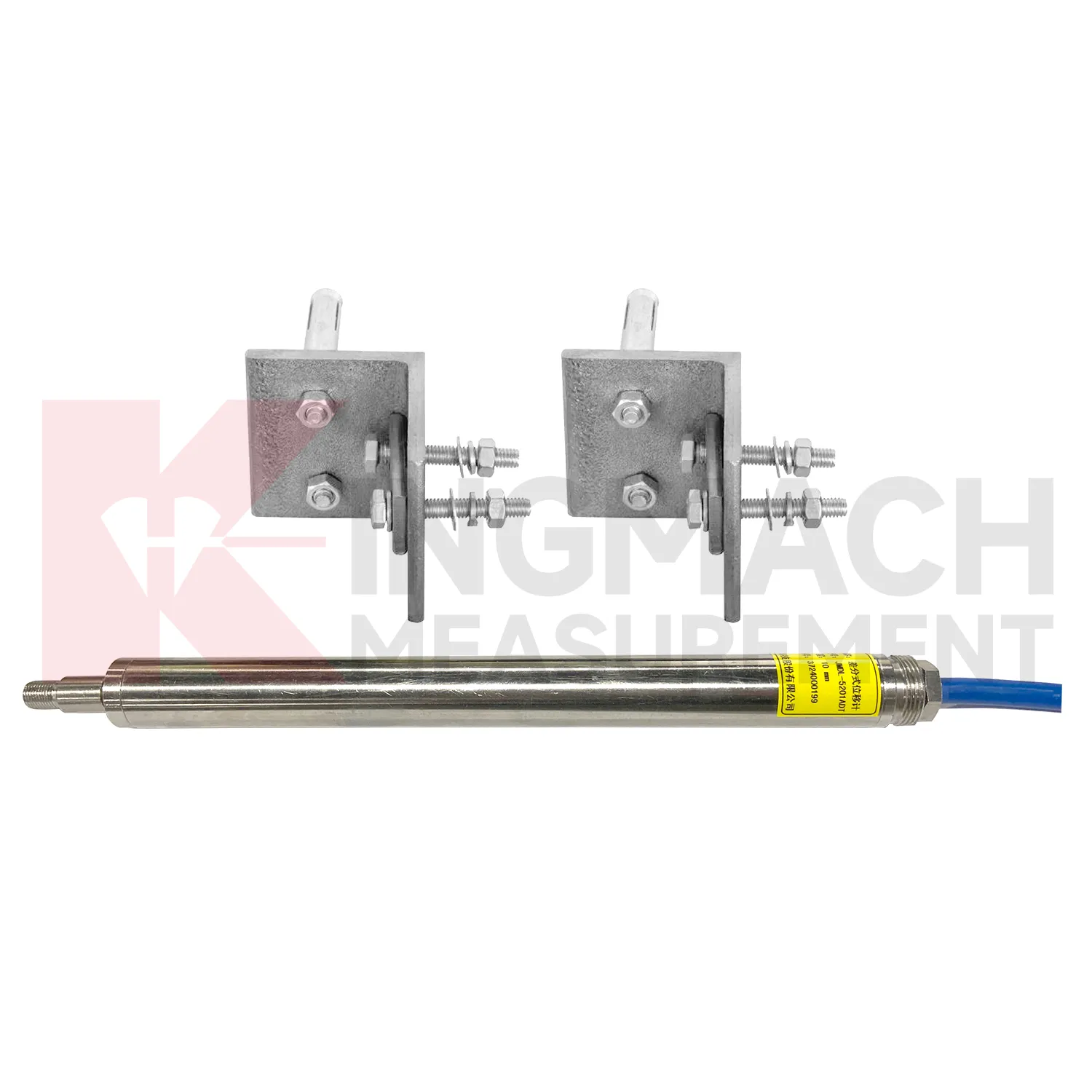
The future of laser displacement sensor
The future of laser displacement sensor will be shaped by connected monitoring rather than isolated field readings. Kingmach products already include digital detection, RS485 communication on selected models, built-in memory, stored calibration data, and compatibility with automatic acquisition systems. The next practical step is cleaner connection between the sensor identity, the monitoring point, and the platform curve. A displacement value should arrive with its model, serial number, range, calibration coefficient, zero value, temperature, and installation position. That will reduce channel errors and make later review faster. In bridges, tunnels, dams, slopes, and foundation pits, future systems will compare displacement with strain, load, tilt, settlement, rainfall, water level, and construction events. Warnings will depend less on a single limit and more on the pattern of movement across several related sensors. The strongest systems will still depend on careful installation, because digital tools cannot correct a loose bracket, wrong range, or poorly recorded baseline. Clear reporting will make displacement monitoring more useful for non-specialist decision makers while preserving the detail engineers need.
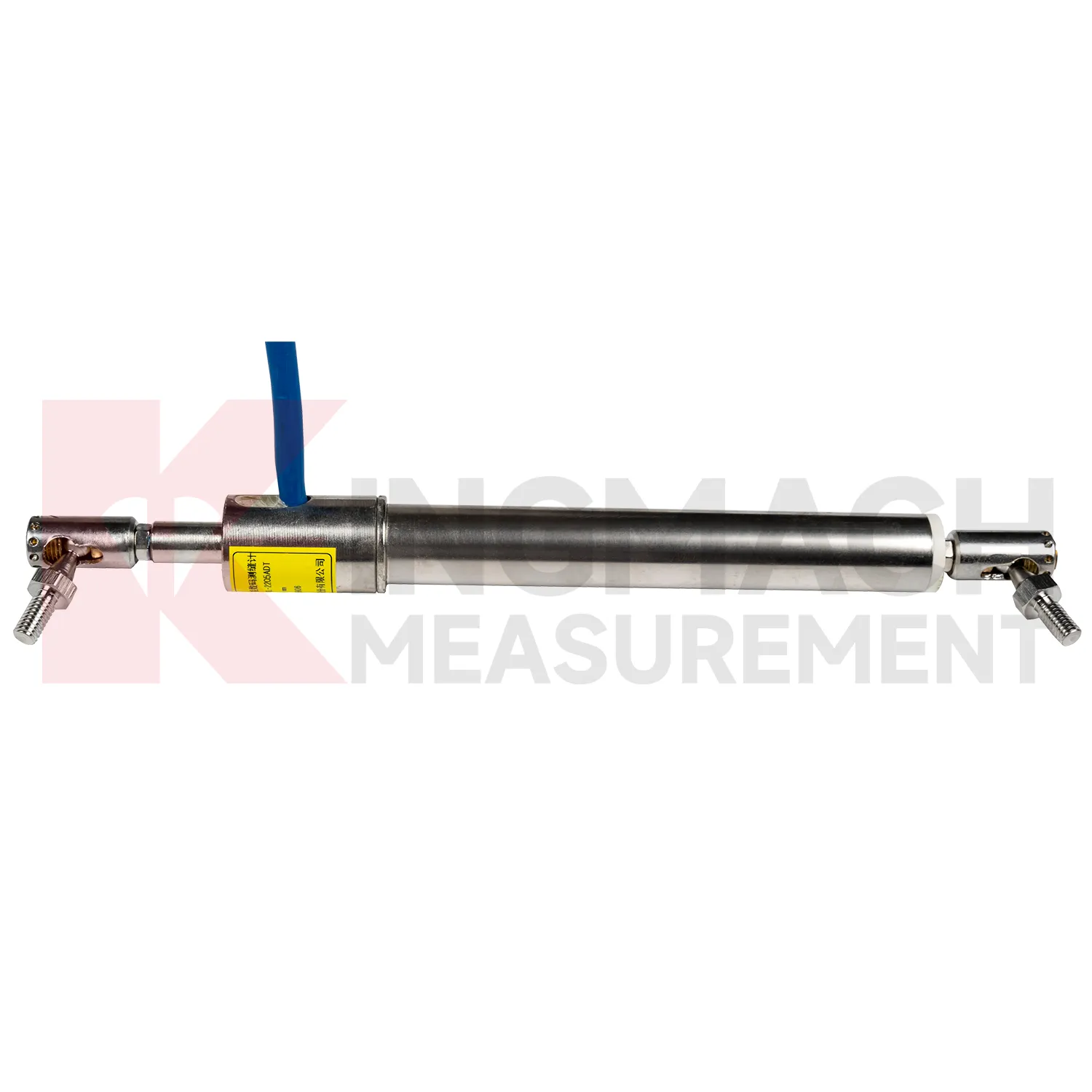
Care & Maintenance of laser displacement sensor
For magnetostrictive laser displacement sensor, maintenance should protect the non-contact sensing advantage by keeping wiring, power, and mounting clean. Kingmach JMCW-21XXADT lists DC24V input, RS485 communication, IP67 protection, reverse polarity protection up to -36V, and wiring colors for power and RS485 lines. Confirm red, yellow, blue, and green wires before energizing the device, and check grounding in cabinets where motors, pumps, or hydraulic equipment may create electrical noise. Because the sensor is used for absolute position measurement over 0 to 1000 mm, inspect mechanical alignment and travel stops so the moving part remains within range. Do not clamp the sensing body in a way that transfers bending force from the machine frame. During service, compare repeatability at known positions and review whether position drift appears after temperature swings, maintenance work, or hydraulic cylinder repair. Keep the installation photo, point number, zero value, and expected movement direction with the commissioning record for later review. If a reading changes after maintenance work, inspect the base, anchor, cable, and cabinet before assuming the structure itself has moved.
Kingmach laser displacement sensor
laser displacement sensor help engineers separate normal movement from structural risk. A bridge expansion joint may move with temperature, a tunnel lining may shift after excavation, and a slope may creep slowly before an alarm condition appears. Kingmach displacement products use several sensing routes, including inductive frequency modulation, differential coil measurement, magnetostrictive sensing, draw-wire conversion, and GNSS-based displacement tracking. Ranges can start at 20 mm for joint monitoring and extend to 2000 mm for draw-wire applications, while selected smart models store model data, serial numbers, calibration coefficients, zero values, temperature, and hundreds of measurement records. This makes the reading easier to trace during acceptance, maintenance, and later review. For a project buyer, the practical question is whether the movement point is exposed, embedded, multi-depth, long-distance, waterproof, or tied to geogrid. Kingmach provides different forms for those different site conditions. The point should be named on the drawing, linked with its cable route, and checked against the expected movement direction before the first automatic reading is accepted. For daily review, the reading should be compared with nearby points, recent weather, site operations, and any loading event that could explain the movement.
FAQ
Q: How should laser displacement sensor be maintained?
A: Inspect brackets, anchors, measuring rods, cable routes, connectors, waterproof seals, cabinet wiring, grounding, and channel labels at planned intervals.
Q: What signs suggest a data problem rather than real movement?
A: Flat lines, sudden jumps after cabinet work, repeated communication gaps, impossible readings, or disagreement with nearby points may indicate sensor, cable, power, or channel issues.
Q: Can temperature affect displacement data?
A: Yes. Some products include low temperature sensitivity, differential measurement, or temperature records, but temperature should still be reviewed with the movement trend.
Q: Should zero values be reset often?
A: No. Resetting without a field reason can hide structural movement. Record the event, reason, and new baseline if a reset is required.
Q: What makes a displacement record useful during handover?
A: A useful record includes model, range, serial number, calibration coefficient, baseline, installation photo, point location, latest trend, warning level, and maintenance notes.
Reviews
Ryan Lewis
Fast delivery and excellent product quality. The accelerometers and tiltmeters are highly reliable. Strongly recommend this company.
Daniel Brown
Excellent environmental monitoring sensors. The data is consistent, and the system integrates smoothly with our existing setup.
Latest Inquiries
To protect the privacy of our buyers, only public service email domains like Gmail, Yahoo, and MSN will be displayed. Additionally, only a limited portion of the inquiry content will be shown.
Isabella***@gmail.comGermany
Hello, we are evaluating weir flow meters for a water management project. Please share accuracy deta...
Sophia***@gmail.comUnited Kingdom
Good day, we need environmental monitoring sensors including temperature, humidity, and wind sensors...
Related product categories
- crack displacement transducers market
- custom displacement transducers
- application of displacement transducer
- displacement measurement transducer
- displacement transducer application
- crack gauge monitoring
- Crack Meter
- Joint Meter
- Joint Displacement Gauge
- String Potentiometer
- Wire Crack Meter
- Magnetostrictive Displacement Sensor