
 EN
EN
 ar
ar bg
bg hr
hr cs
cs da
da nl
nl fi
fi fr
fr de
de el
el hi
hi it
it ko
ko no
no pl
pl pt
pt ro
ro ru
ru es
es sv
sv tl
tl iw
iw id
id lv
lv lt
lt sr
sr sk
sk sl
sl uk
uk vi
vi et
et hu
hu th
th tr
tr fa
fa ms
ms hy
hy ka
ka ur
ur bn
bn mn
mn ta
ta kk
kk uz
uz ku
ku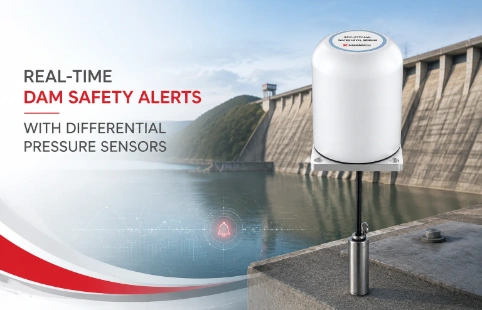
Real-Time Dam Safety Alerts with Differential Pressure Water Level Sensors
Key Takeaways An alert chain needs more than a sensor: define field in...

Resistance of Temperature Sensor: What Engineers Need to Know
When a temperature sensor drifts just a fraction of an ohm, a monitoring project can lose weeks of data before anyone notices. For geotechnical engineers, the relationship between resistance and temperature isn’t just a datasheet curve—it’s the difference between catching a dam’s thermal seepage early or missing it entirely. Kingmach has spent years building temperature sensors that hold their calibration in wet boreholes and frozen slopes. This page lays out how resistance defines sensor accuracy, what specifications matter most, and why we treat every sensor’s R-T curve as a fingerprint rather than a generic graph.
Technical Detail
Temperature sensors used in geotechnical monitoring almost always rely on a predictable change in electrical resistance with temperature. The most common types—platinum RTDs like PT100 and PT1000—follow near-linear curves defined by standards such as IEC 60751. At 0°C, a PT100 reads 100 ohms; at 100°C, roughly 138.5 ohms. But in the field, lead-wire resistance, self-heating, and long-term drift can skew that relationship. Kingmach addresses these challenges through manufacturing practices that prioritize low inherent drift and stable encapsulation. Our sensors typically use thin-film or wire-wound platinum elements housed in stainless steel probes rated for immersion and high pressure. For long cable runs, we offer 3-wire and 4-wire configurations to cancel lead resistance errors—essential when the sensor sits hundreds of meters from the data logger. Every unit ships with a calibration certificate listing its specific R0 value and slope deviation, which makes it straightforward to plug into most datalogger software. While we build to standard tolerances (Class A or B depending on project needs), we can also supply matched pairs for differential temperature measurements where even 0.1°C uncertainty matters. Beyond the element itself, we pay attention to how the cable jacket and potting materials hold up after years of thermal cycling—because a cracked seal means moisture ingress, and moisture changes resistance. Our technical team works directly with site engineers to recommend sensor types, mounting accessories, and compatible readout equipment, so the resistance you measure is the temperature you trust.
News
Key Takeaways An alert chain needs more than a sensor: define field in...
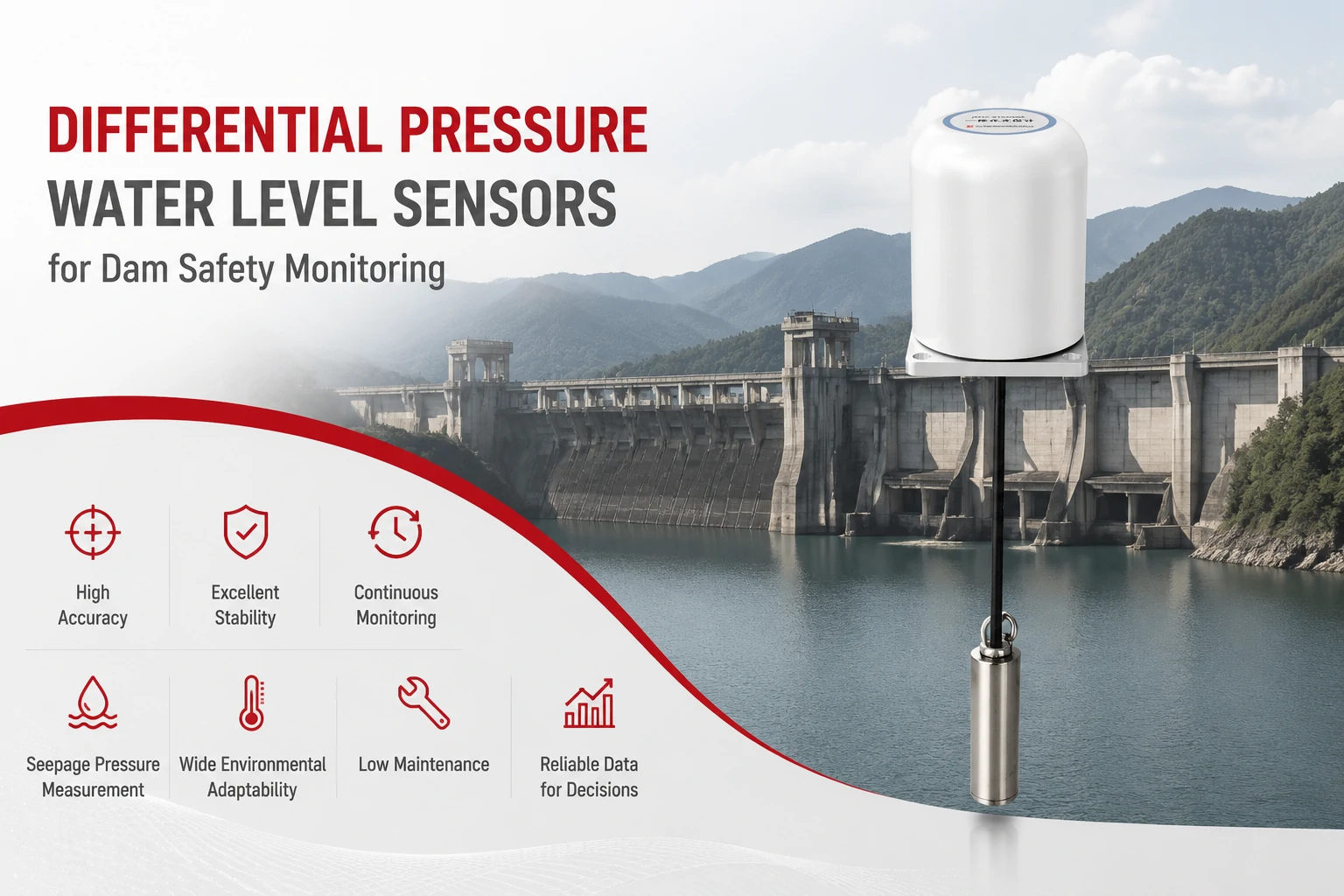
Key Takeaways The strongest fit is usually a confined, submerged, or s...
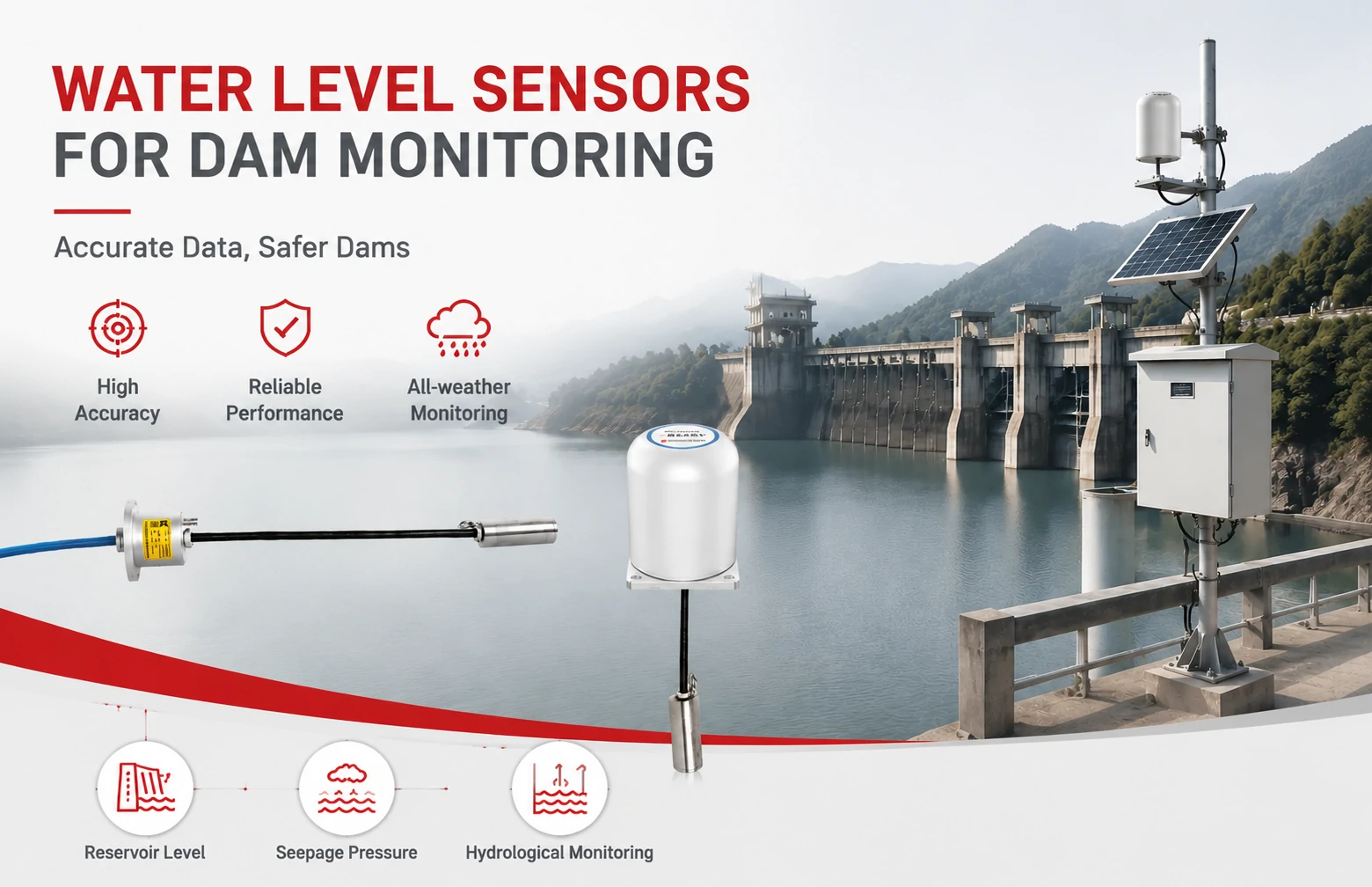
Kingmach Water Level Sensors for Dam Monitoring: A Buyer's Guide to Differential Pre...
Products
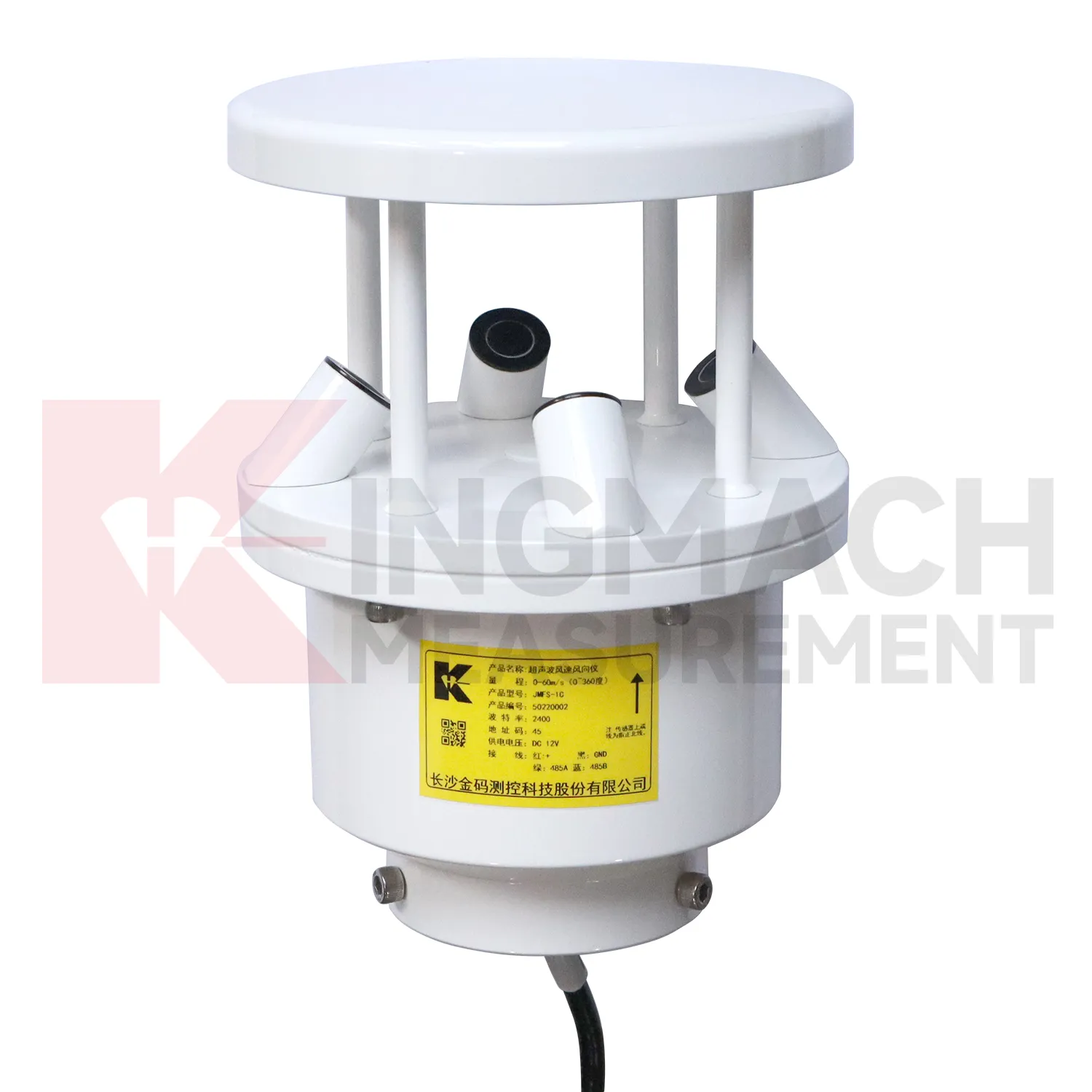
Ultrasonic Wind Speed and Direction Sensor JMFS-1C
View Details
Single-Channel Temperature and Humidity Acquisition Module JMWS-1D
View DetailsFAQ
Drift often comes from two sources: element aging and moisture penetration. Platinum elements can shift slightly after many high-temperature cycles. More commonly in geotechnical installations, water finds its way into the probe body or cable splice and creates a parallel conductive path, lowering the measured resistance. That’s why hermetic sealing and proper cable jacket selection matter as much as the element itself.
It depends on lead length and required accuracy. With a short cable (less than, say, 10 meters), 3-wire does a good job compensating for lead resistance if all three wires are equal in resistance. Beyond that, or if you need precision better than 0.1°C, 4-wire Kelvin sensing eliminates lead resistance entirely. We usually recommend 4-wire for borehole strings and dam monitoring where cables run 50 meters or more.
The tolerance at 0°C: Class A allows ±0.15°C, Class B ±0.3°C. Over the full range, the difference widens. For groundwater temperature monitoring, Class B is often enough. But when you’re measuring small temperature gradients for seepage detection, Class A or even tighter matched pairs give cleaner data.
Most loggers accept standard RTD types, but you need to check the excitation current and input range. Some loggers default to a 1 mA excitation, which can cause self-heating in small PT100 sensors. Kingmach sensors are supplied with the required current and wiring details, and we can pre-wire connectors to match Campbell Scientific, Geokon, or other common readout units.
Share your product type, target capacity, and application requirements. Our team can review the details and recommend a practical next step.
If you are interested in our products or want to become our partner.
Please leave your contact information, our team will contact you as soon as possible.
Mail: [email protected]
Contact Us: +8613808434127
Address: No. 188 Tongzipo West Rd, Changsha, Hunan, China